
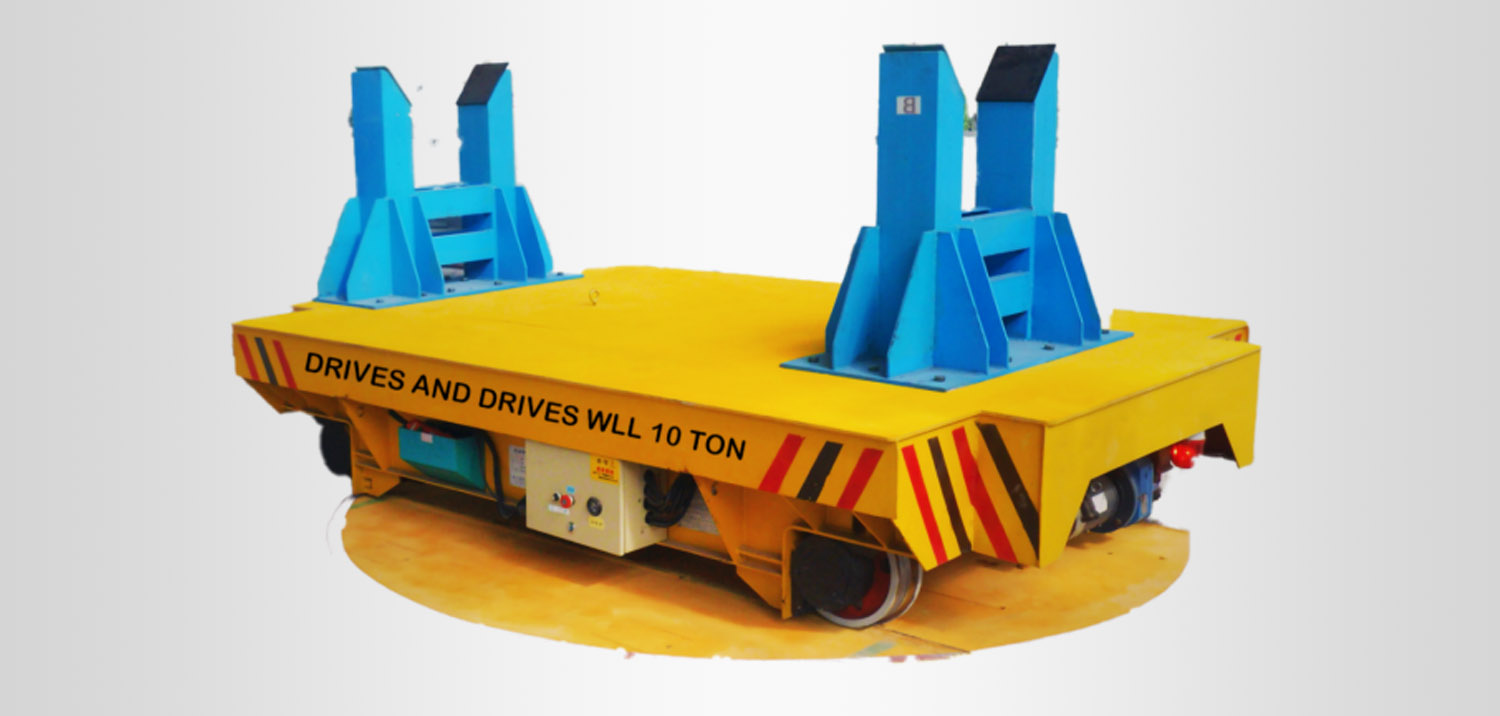
A rail transfer trolley (also known as a transfer cart, motorized bogie, or die cart) is a heavy-duty, flatbed material handling vehicle that runs on fixed steel railway tracks installed directly into a factory floor.
Unlike forklifts or free-steering carts, rail transfer trolleys travel along a predetermined, fixed path. They are designed to transport extremely heavy, bulky, or oversized loads - often ranging from 10 tons to well over 300 tons - safely and efficiently across a manufacturing facility or between different crane bays.
Key Power and Drive Systems :
Depending on the length of the track and the specific factory environment, these trolleys are typically powered in one of four ways :
- Battery Powered : Equipped with heavy-duty industrial batteries, offering a clean, cable-free operation without trip hazards.
- Cable Drum Powered : Powered by an AC cable that automatically winds and unwinds from a spring-loaded or motorized drum as the cart moves. Best for short-to-medium, straight runs.
- Busbar Powered : Draws power from a conductive sliding rail installed either in a trench alongside the track or overhead. Ideal for very heavy loads and continuous, high-frequency use.
- Low-Voltage Rail Powered : The steel tracks themselves are electrified at a safe, very low voltage, which the cart's wheels pick up to power the onboard motor.