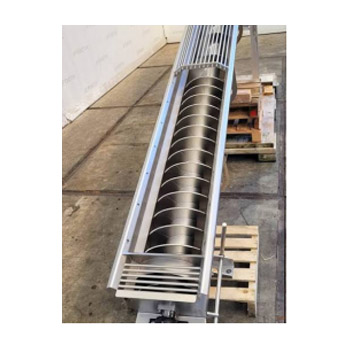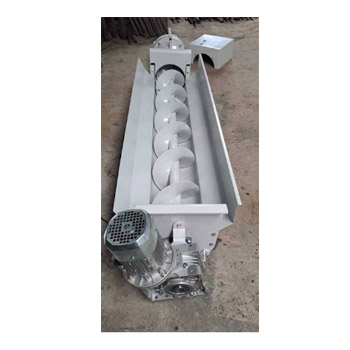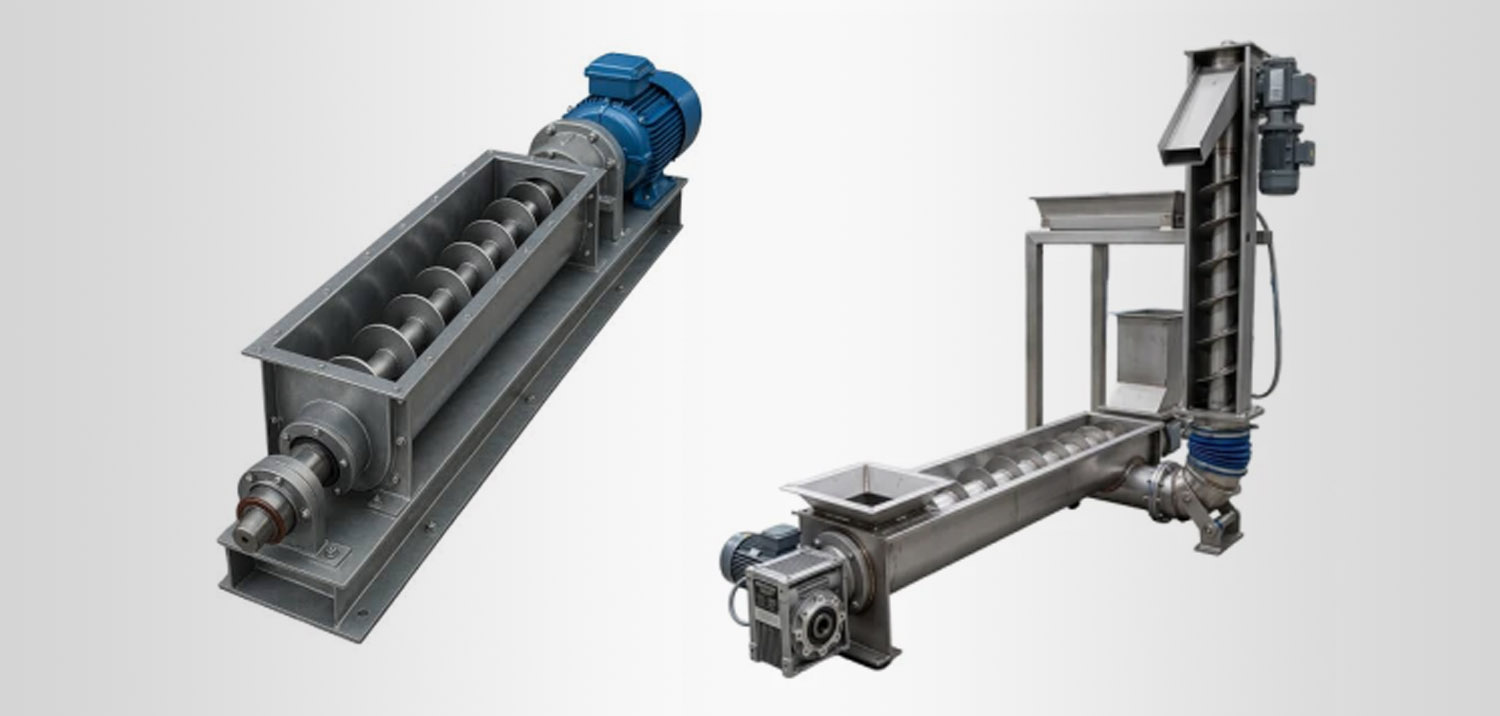
A screw conveyor (often called an auger conveyor) is a heavy-duty mechanical handling system that uses a rotating helical screw blade - known as flighting - typically enclosed within a stationary trough or tubular casing to push and transport bulk materials horizontally, at an incline, or vertically.
Key Components :
- Screw Flighting : The continuous helical blade welded around a central shaft that propels the material forward.
- Trough or Housing : A U-shaped trough or enclosed tubular pipe that contains the material and guides its flow.
- Drive Unit : A motor and gearbox combination connected to the shaft to provide the necessary torque for rotation.
- Hanger Bearings : Support bearings placed at intervals along longer conveyors to keep the screw shaft aligned and stable.
Why Is It Used in Industry?
- Dust and Fume Containment : The enclosed design prevents fine powders, toxic materials, and foul odors from escaping into the workspace, ensuring a clean and safe environment.
- Space-Efficient Footprint : Requires significantly less installation space than belt conveyors, making it ideal for compact plant layouts.
- Multiple Inlets and Discharges : Can be configured with various feed points and discharge gates to distribute material across different locations seamlessly.
- Handling Diverse Textures : Effective at moving not only dry powders and granular items but also semi-fluid, sticky, or viscous materials.
Industrial Applications and Usages :
- Water and Wastewater Treatment : Used heavily to convey dewatered sludge, grit, and screenings from clarifiers and filters.
- Agriculture and Grain Processing : Transports grains, seeds, animal feed, and fertilizers between storage silos, hoppers, and processing machinery.
- Cement and Construction : Moves dry cement, fly ash, lime, and aggregates through batching and mixing plants.
- Food and Beverage Manufacturing: Handles ingredients like flour, sugar, grains, and spices under sanitary, enclosed stainless-steel conditions.
- Chemical Processing : Safely transfers raw powders, plastic pellets, catalysts, and chemical compounds between reactors and packaging units.